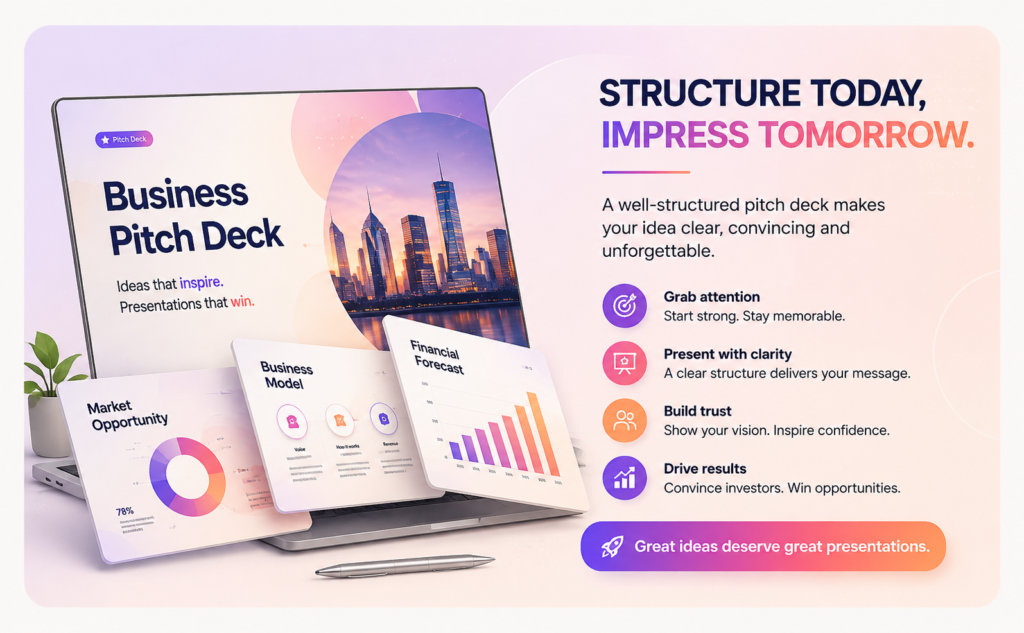
How to Structure a Business Pitch Deck People Actually Remember
A pitch deck has one job: get the listener to say yes to a next step, whether that’s funding, a partnership, or a client signing on. Most decks fail not because the idea is weak, but because the structure buries it. Here’s a structure that consistently works.
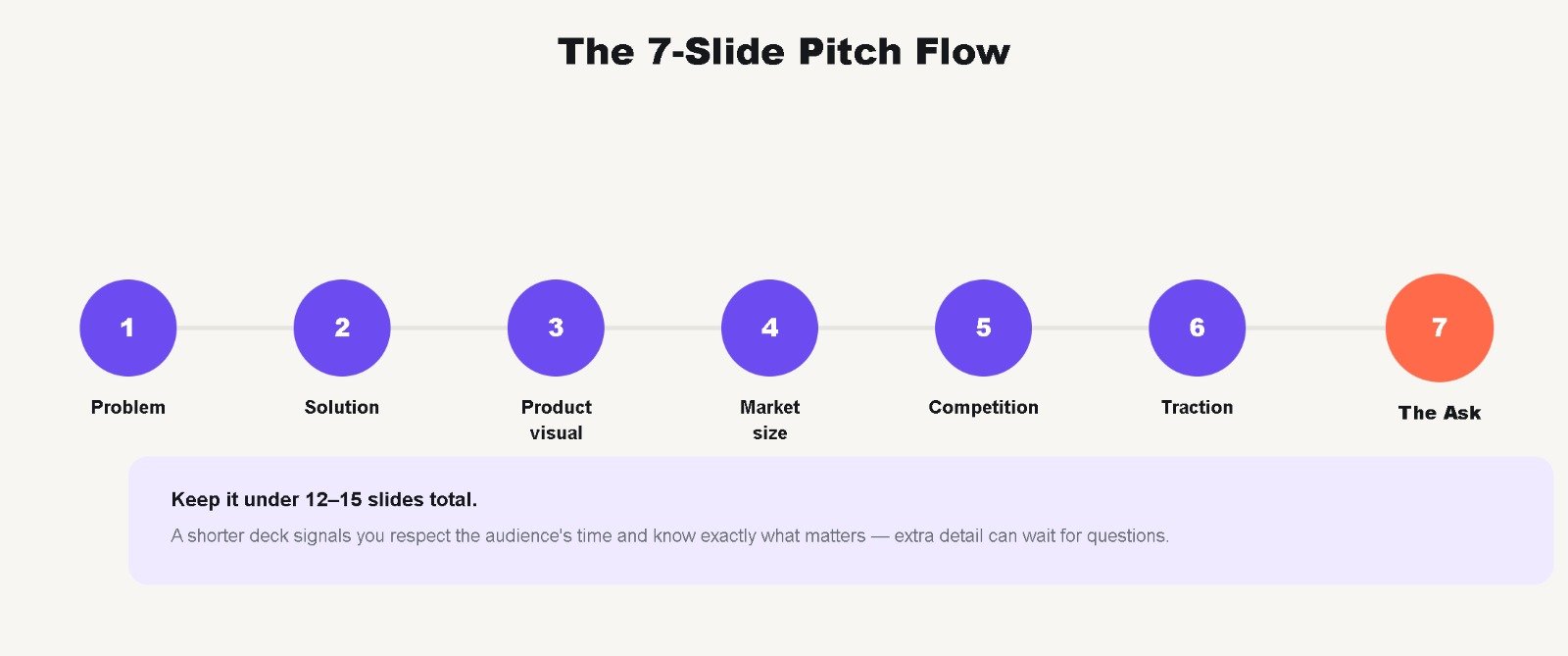
1. Open with the problem, not your company
It’s tempting to start with “Who we are” — resist it. Open with the problem your audience already recognizes. If they nod along in the first 15 seconds, you’ve earned the right to keep talking.
Slide 1 example: A single, sharp sentence describing the problem, paired with one supporting stat or image. No logo-heavy title slide needed yet.
2. Introduce your solution simply
Right after the problem, show your solution in the plainest language possible. Avoid jargon here — if a smart person outside your industry can’t understand this slide in one read, simplify it further.
3. Show, don’t just tell, with a product or service visual
A screenshot, mockup, or simple diagram of how your product/service works does more convincing than three bullet points of description. If you don’t have visuals yet, a simple before/after or step-by-step diagram works.
4. Back it up with market size or demand
This is where numbers belong — market size, growth trends, or demand signals (waitlist numbers, pilot results, testimonials). Keep it to one strong chart or stat per slide, not a wall of data.
5. Address competition honestly
Don’t skip this slide hoping no one asks. A simple 2×2 comparison or feature table showing where you fit relative to alternatives builds credibility — pretending you have no competition usually backfires.
6. Show traction or proof, even if small
Early revenue, pilot customers, a working prototype, media mentions — anything that proves this isn’t just an idea on paper. If you’re pre-traction, focus this slide on your team’s relevant experience instead.
7. End with a clear, specific ask
“We’re looking for investment” is vague. “We’re raising $150K to fund our next 12 months of product development” is specific and actionable. Always end with exactly what you want the audience to do next.
A structural rule that matters more than any single slide
Keep the whole deck under 12-15 slides for a first pitch. If someone wants more detail, they’ll ask — and a shorter deck signals that you respect their time and know exactly what matters.
Don’t start from a blank slide: our Business templates already follow this structure, so you can drop in your content without rebuilding the flow from scratch. Need it tailored to your specific pitch? Message us on WhatsApp.